Symposium 2026
Wednesday, June 3, 2026
9:00 - 12:30 CET
Cagliari, Italy
Registration for the IACEE Symposium is separate from the eucen conference registration.
Register for eucen Annual Conference
ABOUT THE SYMPOSIUM
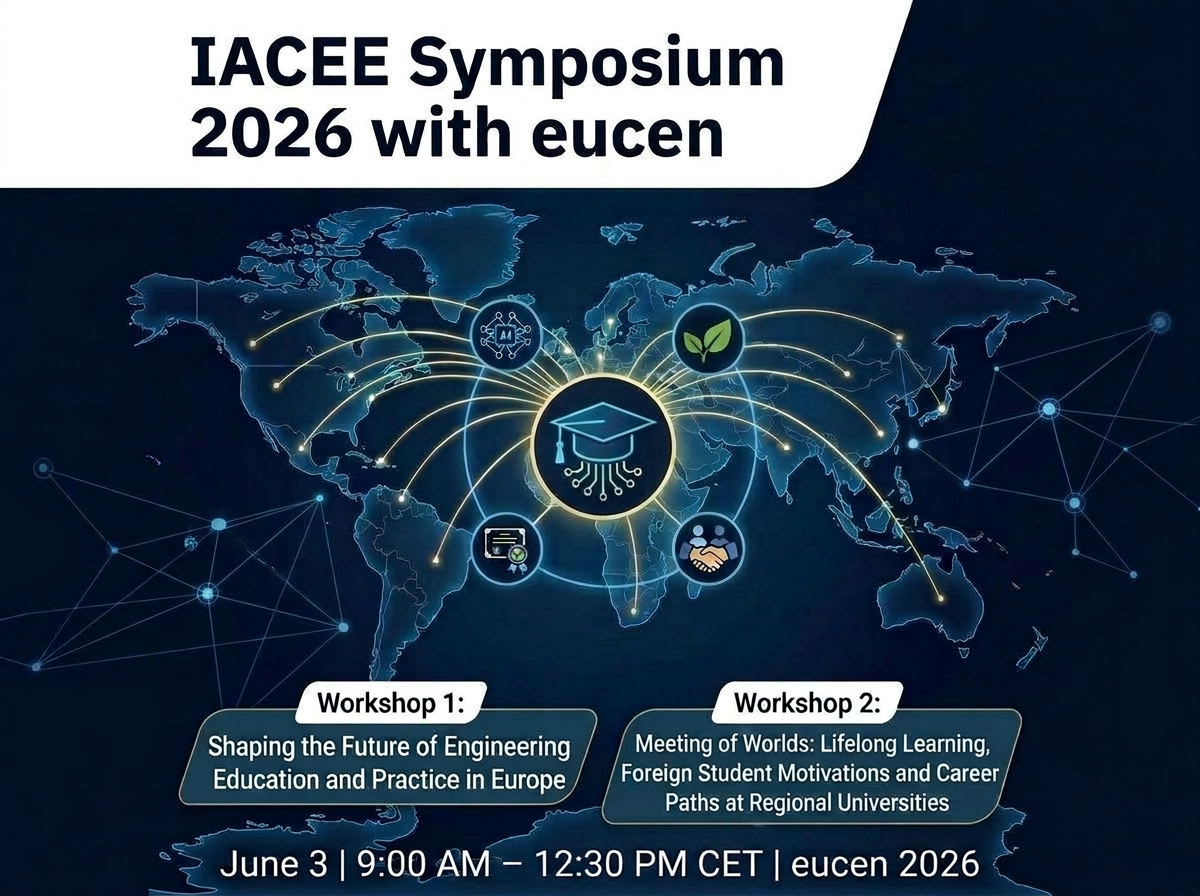
The symposium will have two workshops, aligned with the strands of the eucen Annual Conference: Shaping Society, Shaping Skills, Shaping Tomorrow. Each workshop will be 90 minutes long, with a break in between.
SYMPOSIUM WORKSHOP 1: shaping the Future of Engineering Education and Practice in Europe
(09:00 - 10:30 CET; 90 minutes)
Engineering is rapidly evolving in response to AI, sustainability, and digital transformation. This workshop explores how education systems must adapt, moving beyond traditional disciplines toward interdisciplinary learning.
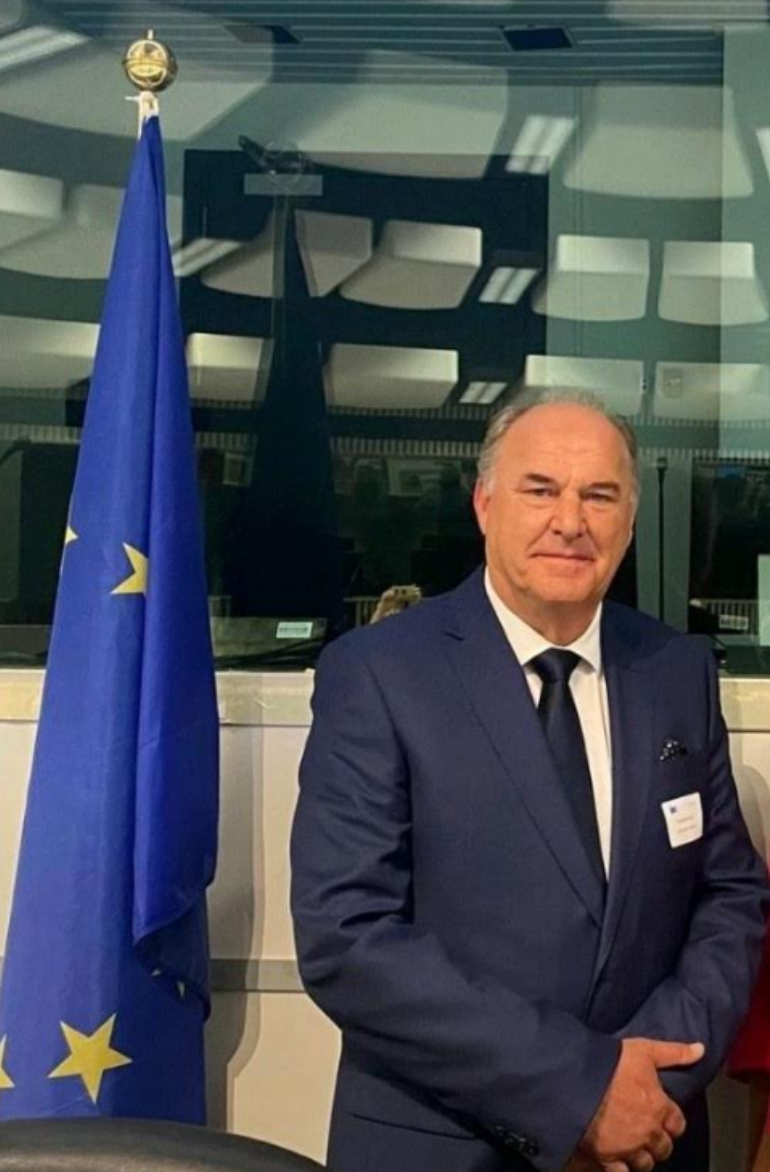
Led by: Dirk Bochar, Secretary-General, Engineers Europe (www.engineerseurope.com), Belgium
Dirk G. Bochar started his career in 1987 as an intern at the Belgian Royal Military Academy from where he moved into the European standardization of electronic components at CEN/CENELEC. He became Executive Director and Secretary General of various European umbrella organizations in the automotive sector as from 1997 onwards. Since 2010 he has been Secretary General of ENGINEERS EUROPE (previously FEANI), where he recently developed a "European Engineering Skills Strategy", between 2022 and 2025, in the framework of the EU-funded "Engineers4Europe" project.
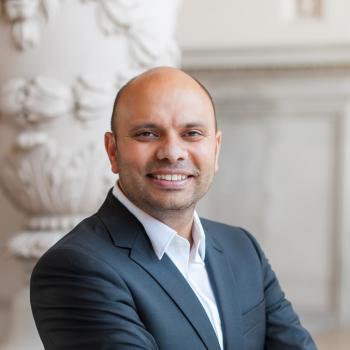
With support from: Robert Prakash, CTO/COO, Stanford Online, Stanford University, USA
Robert Prakash is CTO and COO of Stanford's Center for Global & Online Education (CGOE), which creates online, in-person, and blended learning experiences through Stanford Online. He focuses on strategy, process, and policy, using technology and data to transform educational products and services. His teams manage the complete development pipeline, from studios to learning management systems. With over 15 years in higher education, he currently serves as President of the International Association for Continuing Engineering Education.
Europe's engineering sector faces six urgent realities:
- surging demand for green-tech specialists,
- rapidly evolving roles,
- a weakening public image,
- challenges of modern curriculum,
- the need for interdisciplinary, and
- entrepreneurial thinking and the imperative of lifelong learning.
This workshop brings together educators, industry professionals, and policy stakeholders to explore how engineering education and practice must adapt to these pressures. For a full description of this workshop, please view the paper here: Shaping the Future of Engineering Education and Practice in Europe
Learning Outcomes:
Participants will gain a clearer understanding of competency-based curriculum design, strategies for attracting diverse talent, and frameworks for embedding CPD and lifelong learning into professional pathways. Through facilitated discussions, group exercises, and real-world case studies, attendees will collaboratively develop actionable insights and practical recommendations they can apply within their own institutions and organizations. What the incorporation of AI literacy and analytics into engineering programs may achieve in terms of course design and gap analysis will be discussed as a means to accelerate offerings.
SYMPOSIUM WORKSHOP 2: Meeting of Worlds: Lifelong Learning, Foreign Student Motivations, and Career Paths at Regional Universities
(11:00 - 12:30 CET; 90 minutes)
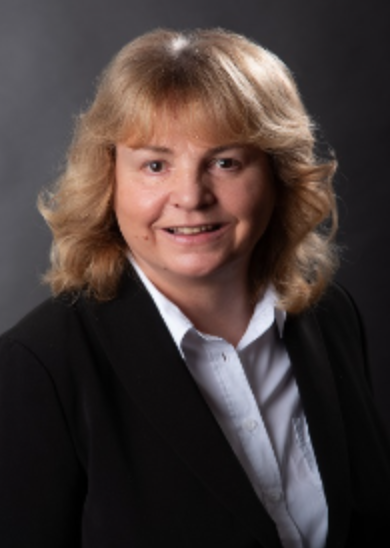 Led by: Dr. Aniko Kalman, University of Nyíregyháza, Hungary
Dr. Kalman is a recognized Hungarian expert in the fields of lifelong learning and andragogy. She is currently a full professor at the University of Nyiregyhaza and serves as the rector's advisor. She is also a member of the academic staff of the Doctoral School at the Faculty of Education and Psychology at Eötvös Lorand University in Budapest and at the Education Doctoral School of the University of Szeged. Between 2002 and 2015 she served as Executive President of the MELLearN Hungarian National University Lifelong Learning Network. She was elected to the Board of Directors of SEFI in 2014 and became a member of the IACEE Council in 2016.

With support from: Anita Chawla, Higher Education Strategist, Engageli, USA
As internationalization reshapes higher education, smaller regional institutions face both unique opportunities and distinct challenges in attracting and retaining international students. Drawing on research from the University of Nyíregyháza, this workshop explores:
- What drives international students to choose rural universities
- How lifelong learning shapes their career planning, and
- What institutional strategies support successful integration and reduce dropout rates?
Designed for continuing higher education professionals, academic staff, and institutional policymakers, participants will examine real-world findings on student motivation, cultural integration, and competence development. The goal of the workshop is to collaboratively design and validate mixed-method research tools that deepen understanding of foreign student experiences by integrating quantitative and qualitative approaches, while fostering cross-cultural insights and building a foundation for ongoing transnational collaboration.
Participants will work on three different aspects of the topic and create research tools (survey questions, interview questions, determine indicators, operational changes at the institution, impact measurements) for studying the subject. At the end, the teams will share their ideas and invite comments, and discussion of the suggested tools will follow. The results will be shared with the participants, with an invitation to join a transnational collaborative.
There will also be a panel discussion with global representation of higher education leaders of how international student bodies have changed university operations.
Learning Outcomes:
The research-based workshop will address two main questions:
- What factors influence foreign applicants in choosing smaller, rural higher education institutions?
- To what extent is the concept of lifelong learning consciously present in their career planning, and how does this evolve during and after their studies in Hungary?
REGISTRATION
Registration for the IACEE Symposium is 50USD and is separate from the eucen conference registration.
Registration fees will be charged in US Dollars using the PayPal payment platform. You do not need a PayPal account to pay using PayPal. You may use your credit card.
REFUND & CANCELLATION POLICY
For cancellations received between March 1, 2026 and April 30, 2026, a refund of the symposium fee, minus a $10 administrative fee, will be given. We apologize, but no refunds or credits will be granted for cancellations after May 1, 2026.
Please submit all requests to Camille Howard at camille.howard@iacee.org. Refunds of registration paid by credit card will be made by refunding to that credit card. Refunds of registrations paid by check will be made by check to the person or organization that issued the check.
If you are unable to attend the symposium due to extenuating circumstances and would like a colleague to replace you, please email your substitution request to camille.howard@iacee.org. No refunds will be given for no-shows.